Pharmacology
A different target for acute pain
A sodium-channel mechanism becomes a clear explanation of a new acute-pain option.
THE QUESTION
How does a nonopioid pain medicine interrupt the signal?
What the evidence says
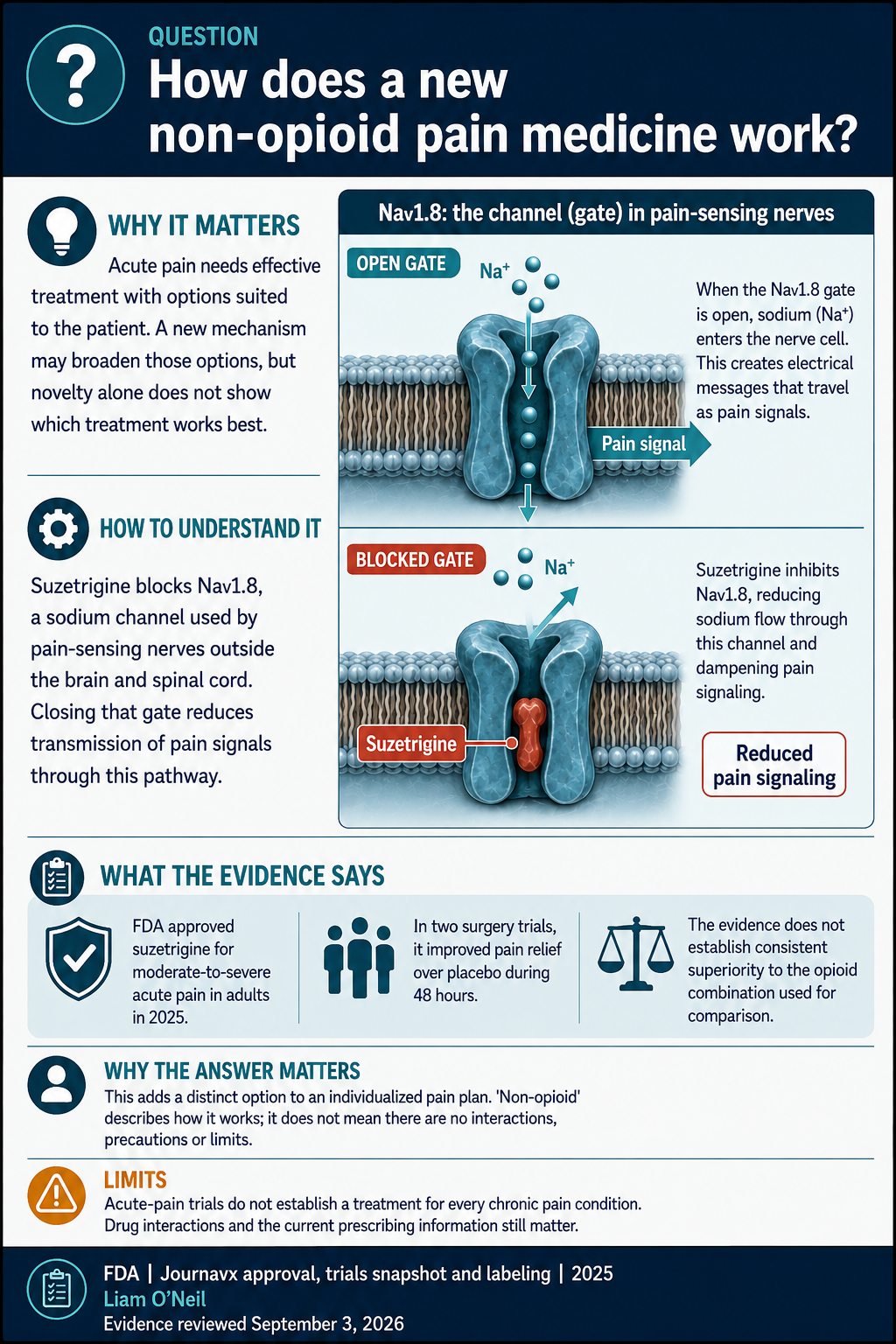
The FDA approved suzetrigine, marketed as Journavx, in January 2025 for moderate to severe acute pain in adults. It targets the NaV1.8 sodium channel involved in peripheral pain signaling. The approval evidence included randomized trials in postoperative pain after abdominoplasty and bunionectomy, with placebo and hydrocodone/acetaminophen comparison groups.
How to read it
The mechanism matters because it explains how this treatment approaches pain signaling without acting as an opioid. A useful explanation connects that target to the actual clinical question: whether the medicine provides appropriate relief for a particular acute-pain situation. The diagram keeps the mechanism separate from the evidence needed to judge benefit.
Keep the context
A different mechanism does not establish superiority over every opioid or suitability for every patient. Acute postoperative studies do not demonstrate broad effectiveness for chronic pain. Contraindications, interactions, adverse effects, and current prescribing information remain essential to a treatment decision.
Source behind the illustration
FDA · Drug Trials Snapshot: Journavx ↗Educational communication of published evidence. Liam authored the illustration and explanation, not the cited study. No publisher or institutional endorsement is implied.
About the visual explanation
The open and blocked channel comparison makes a molecular target visible without asking the reader to decode an entire signaling pathway.
Collection methodology →Need to make a complex subject understandable?
Work with Us ↗