Pharmacy × software
An AI-designed drug still needs a trial
Separating an impressive development process from the clinical evidence a medicine still needs.
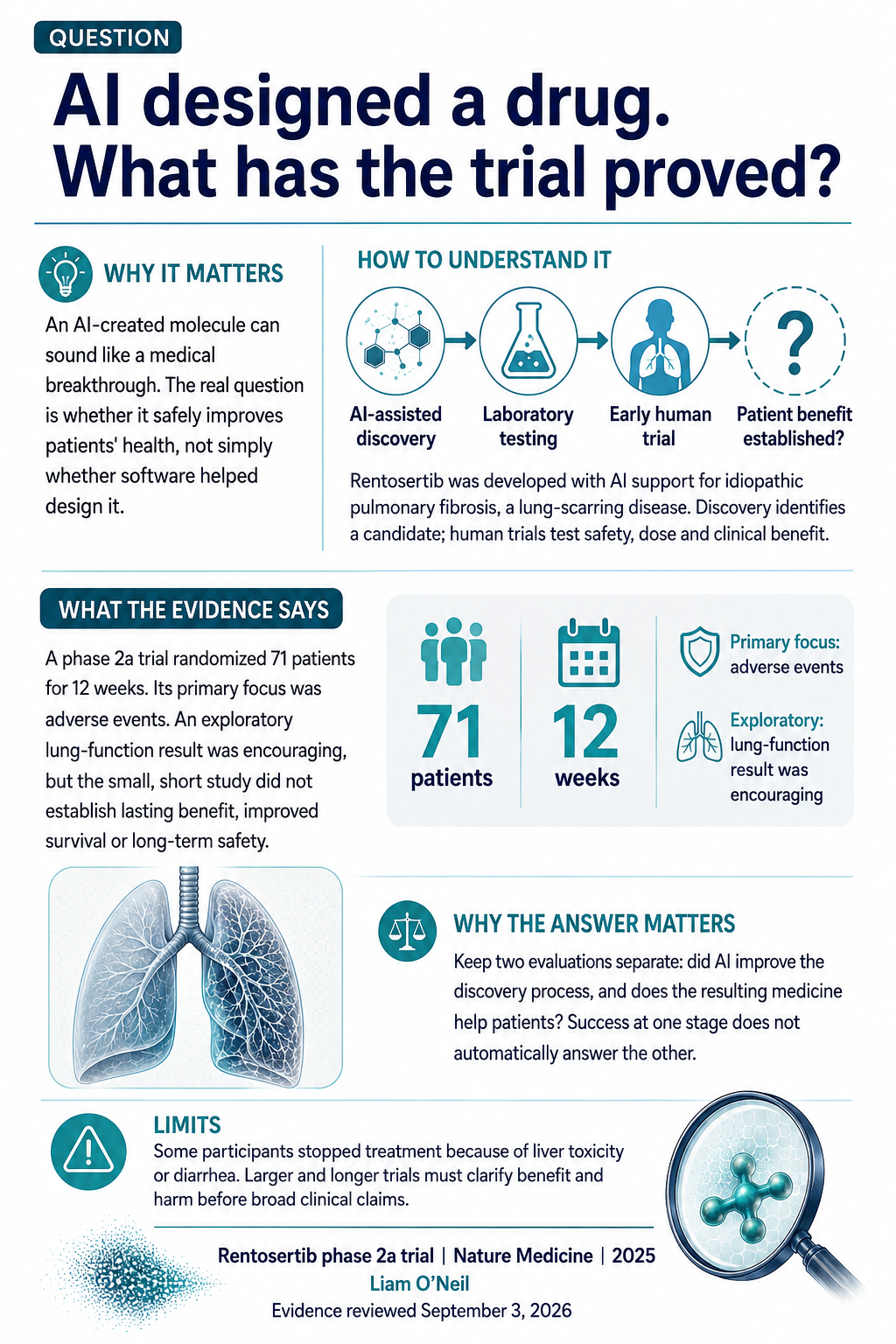
THE QUESTION
How should we judge an AI-assisted drug discovery result?
What the evidence says
A phase 2a study evaluated rentosertib in 71 people with idiopathic pulmonary fibrosis over 12 weeks. The publication describes AI-assisted target identification and molecule design. The trial’s primary focus was safety and tolerability; lung-function findings were exploratory signals from a small, short study.
How to read it
AI can contribute to finding a target or designing a candidate, but those achievements answer different questions from a clinical trial. A useful review asks both whether the development method produced a plausible medicine and whether the medicine benefits patients. Keeping those evaluations separate prevents a compelling technology story from substituting for evidence.
Keep the context
A short phase 2a trial cannot establish long-term survival benefit, durable effectiveness, or broad safety. Exploratory lung-function findings need confirmation in larger studies. The report is not proof that AI-generated candidates generally outperform conventionally developed medicines or that this candidate is established care.
Source behind the illustration
Xu et al. · Nature Medicine, 2025 · rentosertib phase 2a ↗Educational communication of published evidence. Liam authored the illustration and explanation, not the cited study. No publisher or institutional endorsement is implied.
About the visual explanation
Two questions organize the piece: how the candidate was developed, and what the patient study actually demonstrated.
Collection methodology →Need to make a complex subject understandable?
Work with Us ↗