Pharmacy systems
Access is part of the treatment
Connecting a neighborhood change to the less visible work of keeping a prescription filled.
THE QUESTION
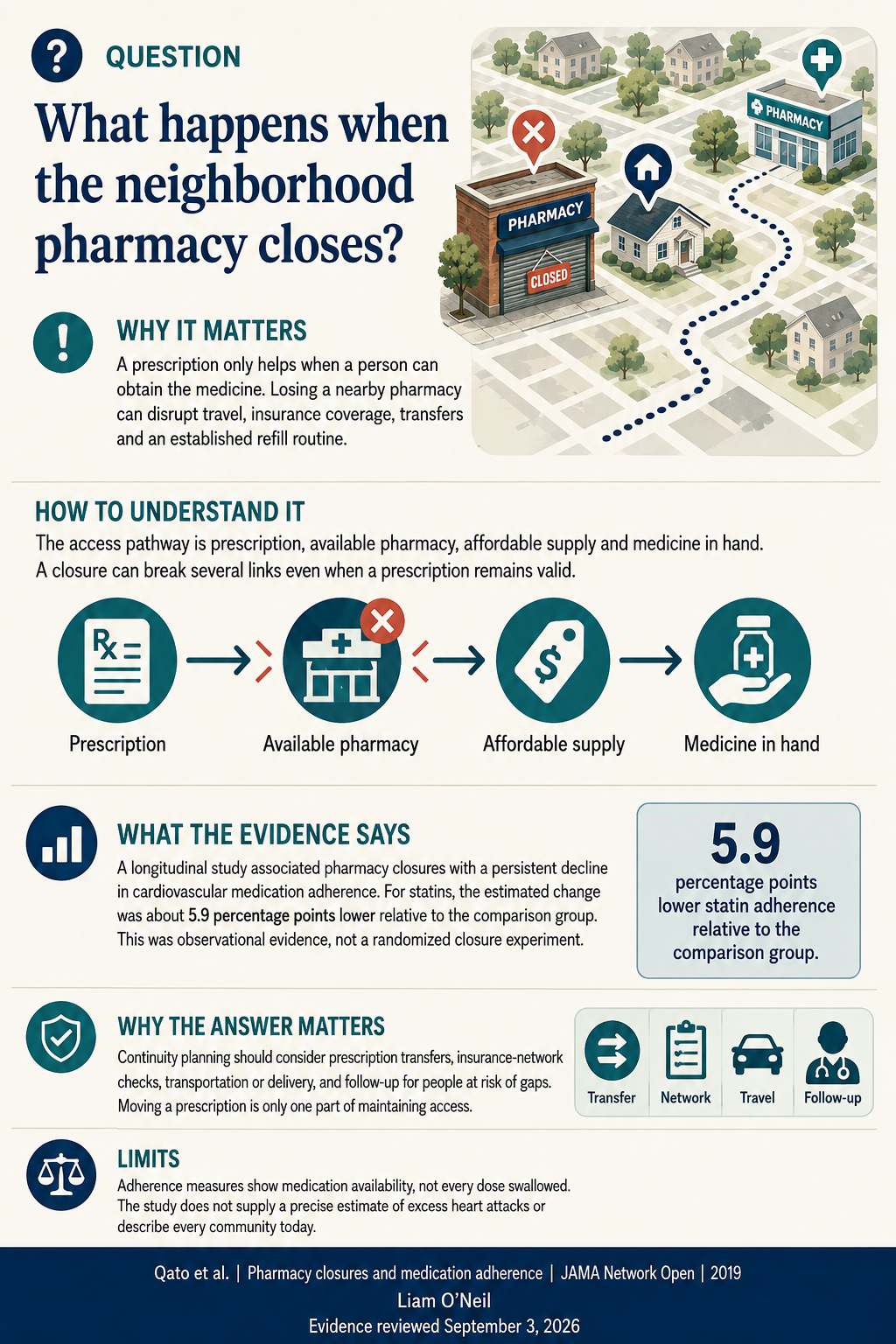
What happens when the neighborhood pharmacy closes?
What the evidence says
A longitudinal study of older US adults associated pharmacy closures with a persistent decline in adherence to cardiovascular medicines. The estimated immediate change in statin adherence was about 5.9 percentage points lower than in the comparison group.
How to read it
A valid prescription is only one step toward medicine in hand. Continuity planning includes transfers, insurance-network checks, transportation or delivery, and follow-up for people at risk of gaps.
Keep the context
This was observational evidence. Dispensing-based adherence measures describe medication availability, not every dose taken. The study does not quantify excess heart attacks or describe every community today.
Source behind the illustration
Qato et al. · JAMA Network Open, 2019 · longitudinal study ↗Educational communication of published evidence. Liam authored the illustration and explanation, not the cited study. No publisher or institutional endorsement is implied.
About the visual explanation
A neighborhood map introduces a systems problem in familiar terms. The prescription-to-medicine pathway then shows where transfers, coverage, travel and follow-up can break down.
Collection methodology →Need to make a complex subject understandable?
Work with Us ↗