Healthcare technology
The time an AI scribe gives back
A clinical AI trial, explained through the work that happens after a note is drafted.
THE QUESTION
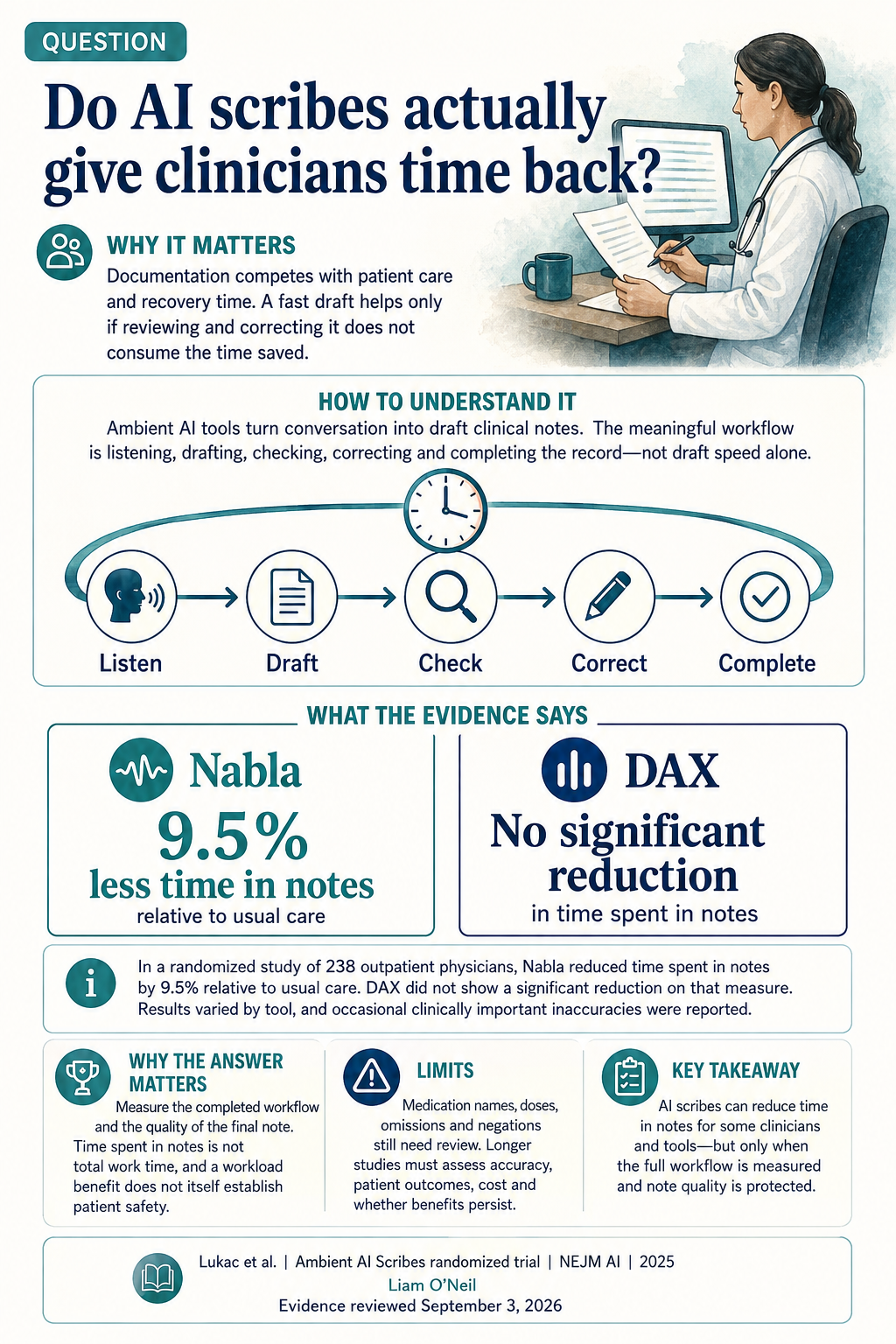
Do AI scribes actually give clinicians time back?
What the evidence says
In a randomized study of 238 outpatient physicians, Nabla reduced time spent in notes by 9.5% relative to usual care. DAX did not show a statistically significant reduction on that measure. Occasional clinically important inaccuracies were reported.
How to read it
A fast draft helps when reviewing and correcting it preserves the time saved. The relevant question is how the completed workflow changes, including the quality of the final note.
Keep the context
Time in notes is not total working time or a patient-safety outcome. This study does not establish that every scribe, practice setting, or future product version performs the same way.
Source behind the illustration
Lukac et al. · NEJM AI, 2025 · randomized trial ↗Educational communication of published evidence. Liam authored the illustration and explanation, not the cited study. No publisher or institutional endorsement is implied.
About the visual explanation
The design follows the entire documentation loop: listen, draft, check, correct, complete. Placing the two products side by side keeps a category-wide claim from replacing the study’s actual findings.
Collection methodology →Need to make a complex subject understandable?
Work with Us ↗