Patient communication
Medication safety on a hotter day
Turning medication–heat mechanisms into a practical conversation about planning ahead.
THE QUESTION
How can hot weather change medication risk?
What the evidence says
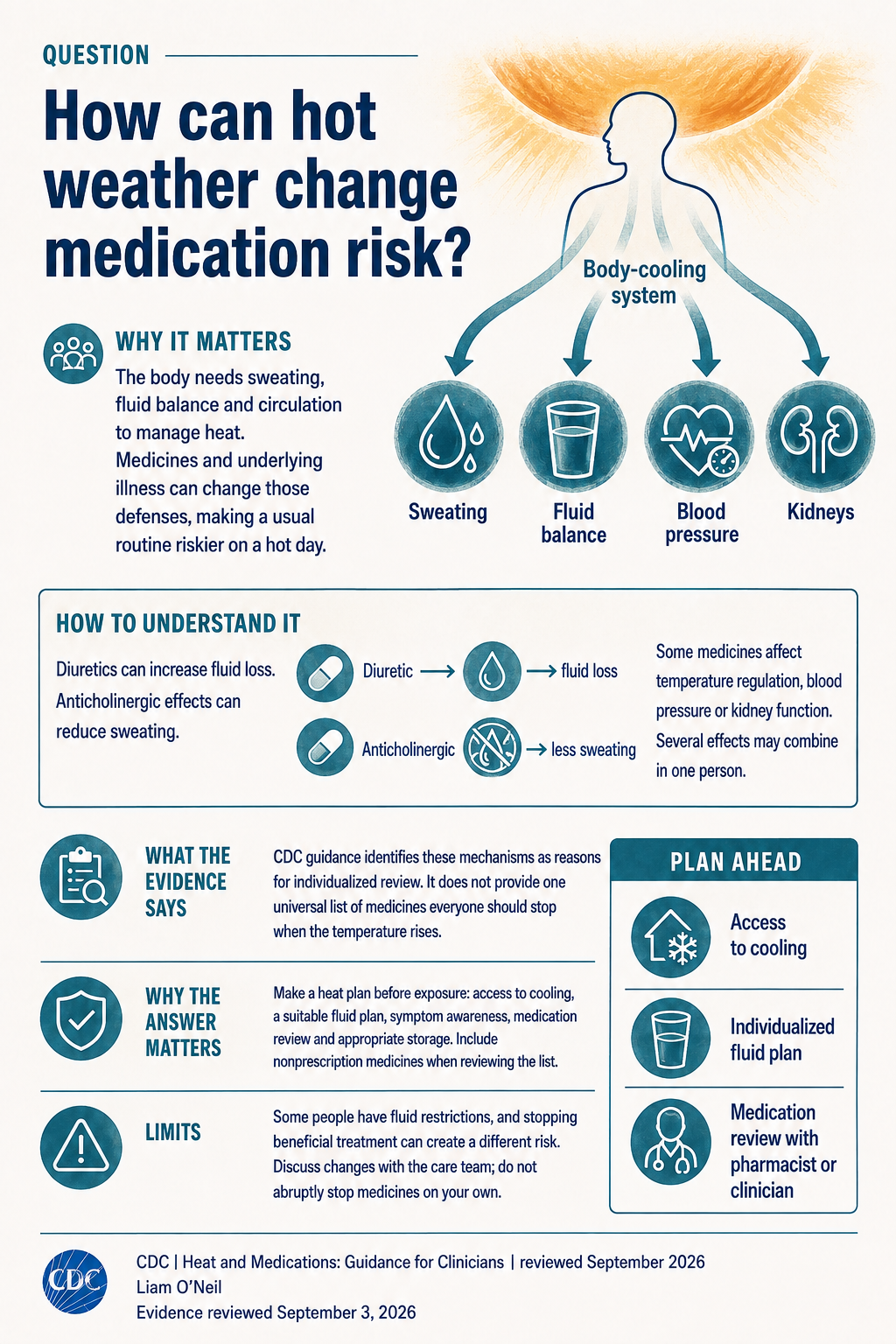
CDC clinician guidance describes how medicines can affect heat tolerance through fluid loss, sweating, temperature regulation, blood pressure and kidney function. Its guidance reflects expert opinion and calls for individual assessment.
How to read it
A heat plan can address access to cooling, an appropriate fluid plan, symptom awareness, medication review and storage. Include nonprescription medicines when discussing the list.
Keep the context
Some people have fluid restrictions, and stopping a useful medicine creates its own risks. There is no universal list everyone should stop during hot weather. Discuss changes with the care team rather than abruptly stopping treatment.
Source behind the illustration
CDC · Heat and Medications: Guidance for Clinicians ↗Educational communication of published evidence. Liam authored the illustration and explanation, not the cited study. No publisher or institutional endorsement is implied.
About the visual explanation
Water, sweating, circulation and kidneys create a familiar entry into a complex topic. A planning panel translates mechanisms into questions a person can bring to a pharmacist or clinician.
Collection methodology →Need to make a complex subject understandable?
Work with Us ↗