Long-term care
Weight loss needs a maintenance plan
A treatment withdrawal study makes the case for planning beyond the initial weight loss.
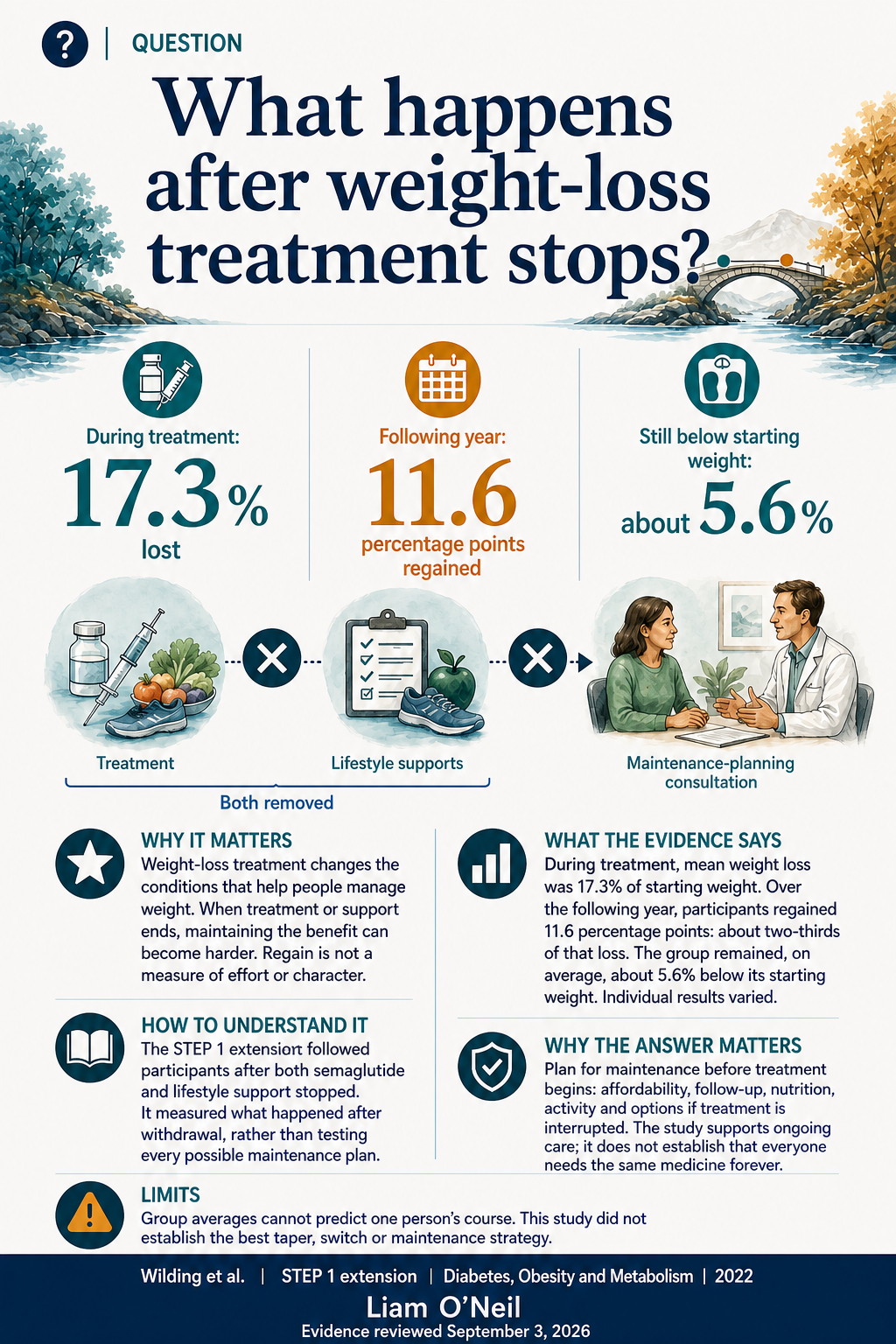
THE QUESTION
What happens after weight-loss treatment stops?
What the evidence says
In the STEP 1 extension, participants previously assigned to semaglutide 2.4 mg had lost an average of 17.3% of body weight by week 68. One year after withdrawal, they had regained 11.6 percentage points, leaving an average net loss of 5.6% from baseline. The extension followed a subset of the original trial participants.
How to read it
Initial weight loss and long-term maintenance are different questions. The illustration puts the follow-up period alongside the treatment period so that an early result is not mistaken for a permanent outcome. A useful clinical conversation includes treatment access, tolerability, nutrition, activity, and what support will remain available over time.
Keep the context
Both medication and the trial’s structured lifestyle intervention were withdrawn. This extension does not isolate the effect of stopping medication alone, predict an individual’s outcome, or establish the best maintenance strategy. Treatment changes belong in a discussion with the prescribing team.
Source behind the illustration
Wilding et al. · Diabetes, Obesity and Metabolism, 2022 · STEP 1 extension ↗Educational communication of published evidence. Liam authored the illustration and explanation, not the cited study. No publisher or institutional endorsement is implied.
About the visual explanation
A bridge connects the initial change with the work of maintenance. The patient encounter gives the percentages a practical setting.
Collection methodology →Need to make a complex subject understandable?
Work with Us ↗