Measurement & equity
A precise display can hide uncertainty
Showing how an optical signal becomes a device estimate—and why interpretation still matters.
THE QUESTION
Can a reassuring oxygen reading miss low oxygen?
What the evidence says
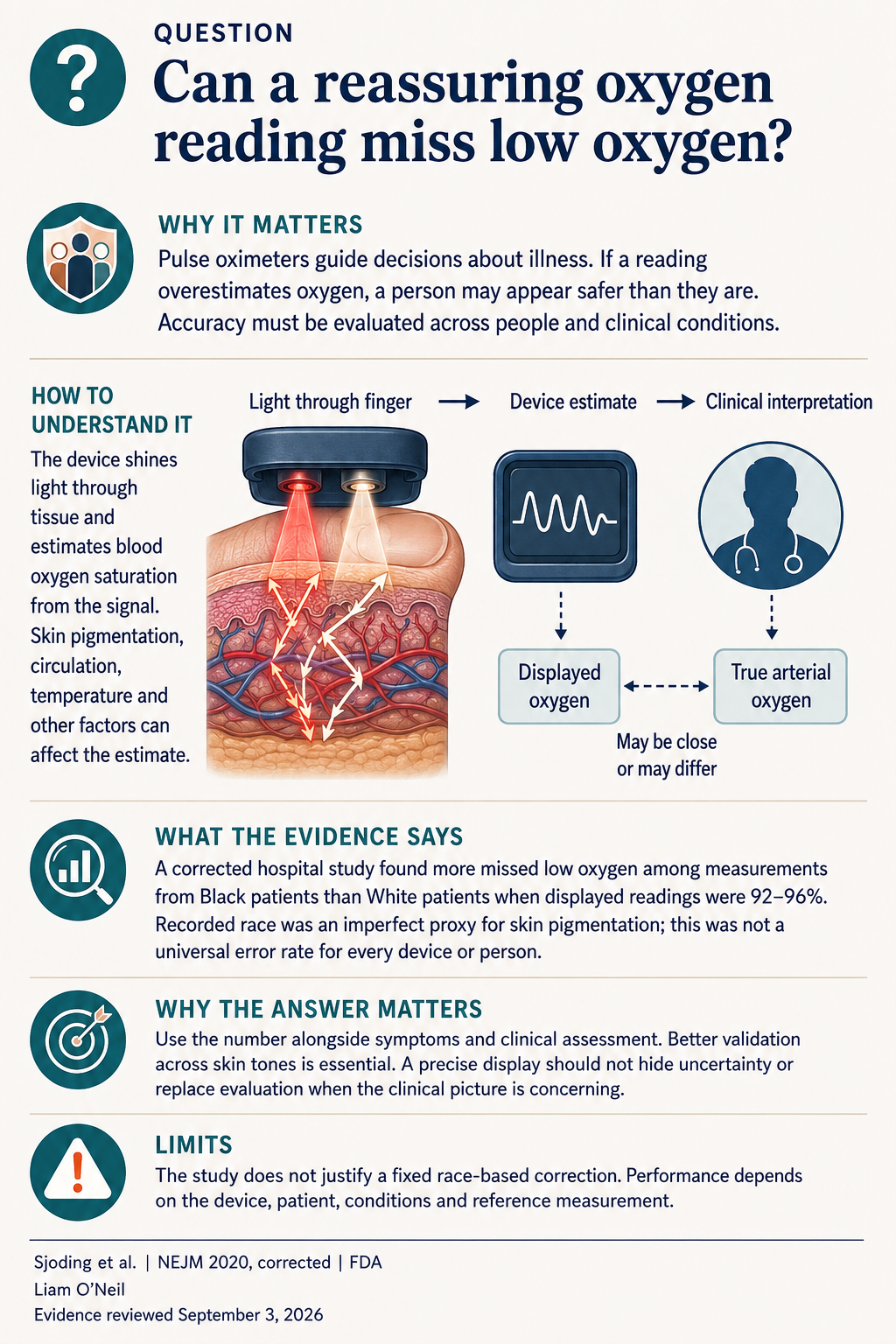
A corrected hospital study reported more missed low-oxygen measurements among Black patients than White patients when displayed oxygen saturation was 92–96%. Recorded race was an imperfect proxy for skin pigmentation.
How to read it
Pulse oximetry estimates oxygen saturation using light passing through tissue. Skin pigmentation, circulation, temperature, device design and clinical conditions can affect performance. A reading belongs alongside symptoms and clinical assessment.
Keep the context
The findings are not a universal error rate for every device or person and do not justify a fixed race-based correction. This is about pulse oximetry, not a validation study of the LoneHeart camera experiment.
Source behind the illustration
Sjoding et al. · NEJM, 2020, corrected · observational study ↗Educational communication of published evidence. Liam authored the illustration and explanation, not the cited study. No publisher or institutional endorsement is implied.
About the visual explanation
The optical diagram separates the physical signal, the displayed estimate and clinical interpretation. That distinction makes uncertainty visible without suggesting a simple correction factor.
Collection methodology →Need to make a complex subject understandable?
Work with Us ↗