Evidence interpretation
Seven days, with the right context
Making noninferiority understandable without turning a trial into a universal treatment rule.
THE QUESTION
When are seven days of antibiotics enough?
What the evidence says
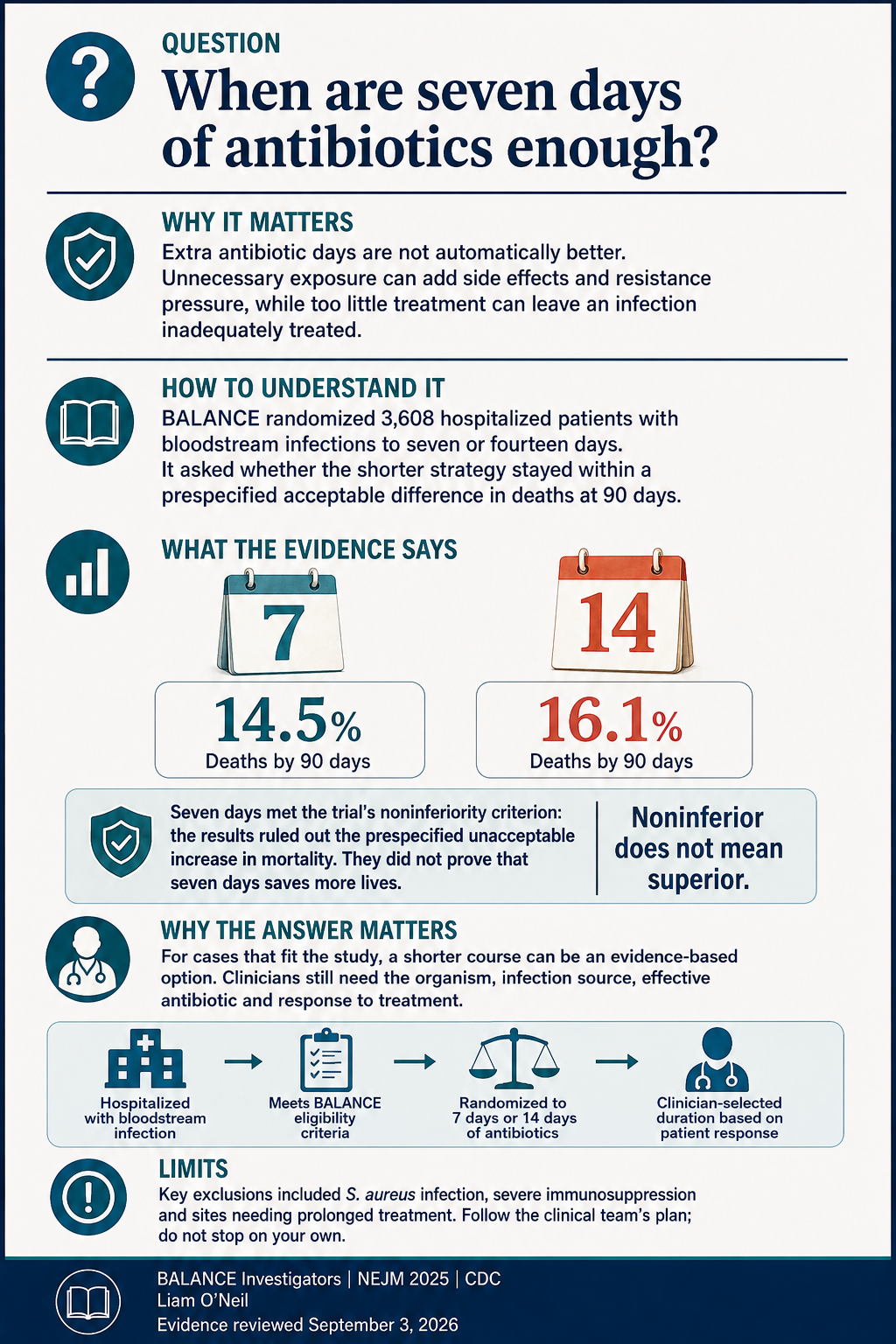
BALANCE randomized 3,608 hospitalized patients with bloodstream infections to seven or fourteen days of antibiotics. Mortality at 90 days was 14.5% and 16.1%, respectively. Seven days met the trial’s prespecified noninferiority criterion.
How to read it
For patients who fit the trial, the shorter strategy was within the study’s accepted margin. Noninferiority does not establish that seven days saves more lives. Organism, infection source, effective treatment and clinical response still matter.
Keep the context
Key exclusions included Staphylococcus aureus infection, severe immunosuppression, and infections requiring prolonged treatment. Follow the treating team’s plan; this illustration is not a reason to stop antibiotics independently.
Source behind the illustration
BALANCE Investigators · NEJM, 2025 · randomized trial ↗Educational communication of published evidence. Liam authored the illustration and explanation, not the cited study. No publisher or institutional endorsement is implied.
About the visual explanation
The seven- and fourteen-day calendars make the comparison immediate. The finding and the eligibility limits stay together, so the smaller mortality percentage is not mistaken for proof of superiority.
Collection methodology →Need to make a complex subject understandable?
Work with Us ↗