Prevention & access
Prevention that fits a longer interval
Long-acting prevention, explained through both trial evidence and continuity of care.
THE QUESTION
What can twice-yearly PrEP change?
What the evidence says
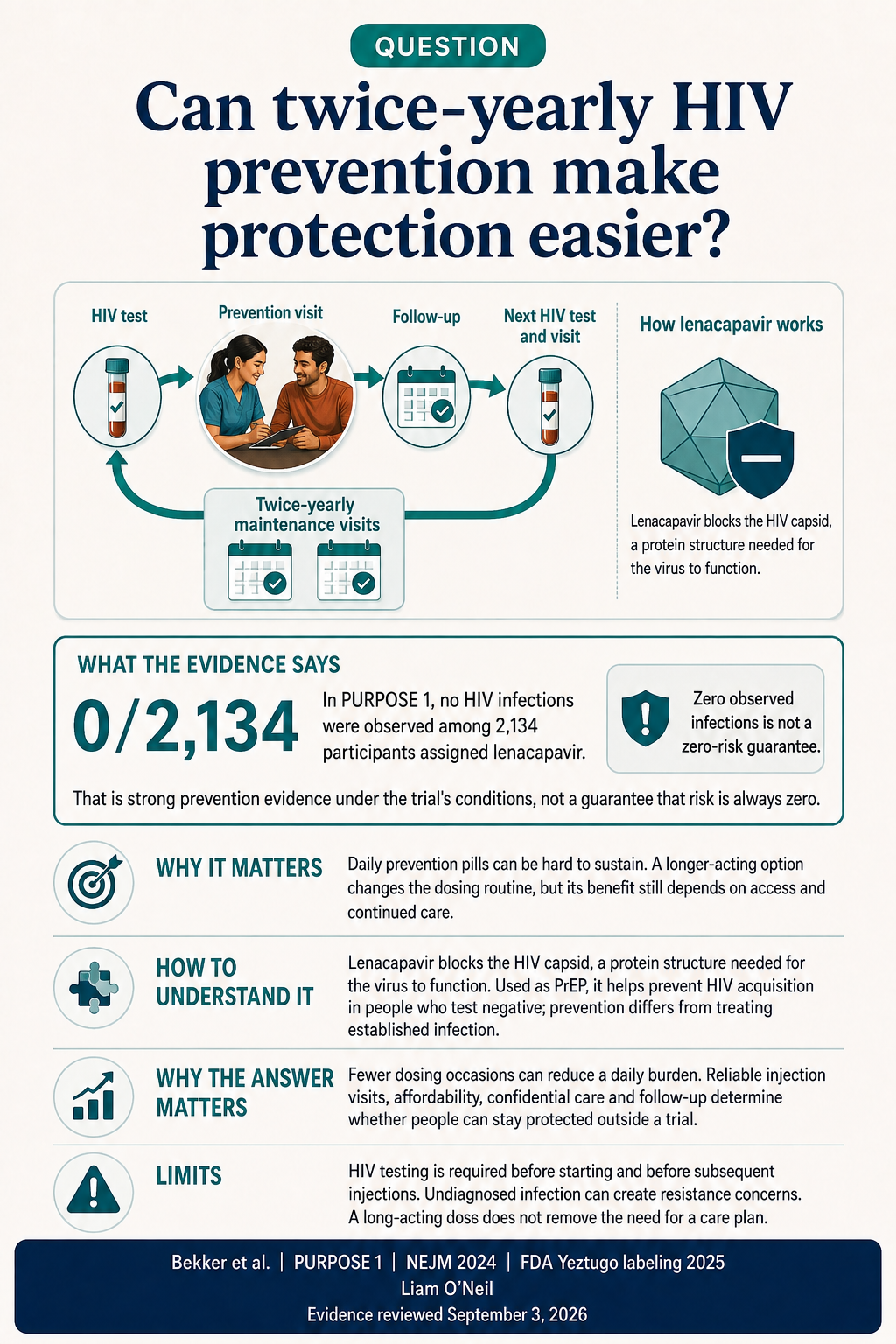
PURPOSE 1 evaluated twice-yearly injectable lenacapavir for HIV prevention among adolescent girls and young women in South Africa and Uganda. No HIV infections were observed among 2,134 participants in the lenacapavir group during the reported analysis. The study compared outcomes with estimated background incidence and oral prevention groups.
How to read it
A longer dosing interval can change the practical work of prevention. It reduces the frequency of dosing, but appointments, HIV testing, access, and follow-up remain part of the pathway. The illustration links the medicine to those supporting steps rather than presenting an injection as a complete care system.
Keep the context
Zero observed infections does not mean zero future risk. The reported trial population, observation period, and adherence conditions matter. Prevention choices and testing requirements depend on current clinical guidance and individual circumstances; these results are not a guarantee for every person or setting.
Source behind the illustration
Bekker et al. · NEJM, 2024 · PURPOSE 1 ↗Educational communication of published evidence. Liam authored the illustration and explanation, not the cited study. No publisher or institutional endorsement is implied.
About the visual explanation
The circular care pathway makes the dosing interval memorable while keeping testing and follow-up in the picture.
Collection methodology →Need to make a complex subject understandable?
Work with Us ↗